|
|
|
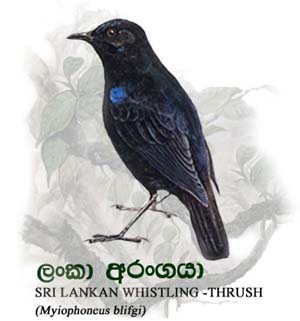
Head and
neck is black in color. Shoulder, dorsal area and brest are dark blue.
Bright blue shoulder patch can be seen in male. Flight fethers rump,main
tail are blackish bround.Beak and feet are black. Iris is broun. Belly is
brown
Female
is more browner. Her shoulder
patch is pale. The plumage of imature bird is more beown with
little blue.
|
|
|
|
This bird is very shy.
They prefer thick under groths. Sometimes it comes out. It can be seen
hunting or singing on sticks or rocks beside streams. They prey on
creatures like insects, geckos.
The breeding season lies from March to May. But the April is more
important. They make the nest on banks or on branchers of
5-10 feet tall tree.
The neat is cup shaped. The “Varalla” and ferns are used as main building materials. Inside the
nest is made out of
dead leaves. About two white color eggs with pale and
red brown colored patches and
strips are laied at a time. But most of the time only a one offspring is
born. Haching is done by female, but the feeding is done by both male and
female.
|
|
|
They live hidden in place
with water flowa at about 3000 feet elevations. They can be seen in thick
under growths near flowing streams….They are recorded in Haggala Horton
place. Today they are restricted to the higher elevations of central
hills. This bird is difficult to find due to it’s shyness.
|
|

|
|
|
|
Length of body = 8.25 inches(20cm)
Length of wing = 4.2 -4.4 inches
Length of tail = 3.1-3.5 inches
Length of beak= 1.25 inches
|
|
|
Rapid destruction of forest and drying off
of water flows are the main threats.
|